
고정된 것과 유동적인 것: 성 역할의 두 가지 측면—유럽 신석기 시대 활동 양상과 매장 관습에 대한 종합적인 연구
ABSTRACT
Objectives
This study investigates gender roles in the European Neolithic by analyzing activity-related skeletal changes (ARSCs) and burial practices at two Polgár microregion sites in Hungary: Polgár-Ferenci-hát (5300–5070 cal. bce) and Polgár-Csőszhalom (4800–4650 cal. bce).
Materials and Methods
A total of 125 well-preserved adult skeletons were included in the study. Types of ARSCs examined include spondylolysis (overall workload), humeral enthesopathies (unilateral upper-limb overuse), and metatarsal facets (habitual postures). Burial positions and grave goods were analyzed to assess sex-based differences in burial practices.
Results
Polgár-Ferenci-hát exhibited no clear differences in burial treatment between the sexes, while Polgár-Csőszhalom displayed marked sex-related distinctions in burial practices. Individuals at Polgár-Csőszhalom bore greater physical workloads than those at Polgár-Ferenci-hát, though no consistent sex-based differences in lesions emerged. Males at both sites demonstrated recurrent right upper limb overuse, aligning with broader prehistoric European trends. At Polgár-Csőszhalom, nine males and one female buried with male-associated items also exhibited metatarsal facets, linking sex-associated activity, posture, and social identity.
Discussion
The findings suggest that society at Csőszhalom was structured around gendered roles, yet allowed for individual variation. While the limited number of individuals and the inherent uncertainty in interpreting activity markers call for caution, this study enhances our understanding of prehistoric social organization by revealing both recurring sex-related patterns of behavior and local flexibility in the expression of gender roles.
2.2 생물학적 성별에 따른 매장 처리 코딩
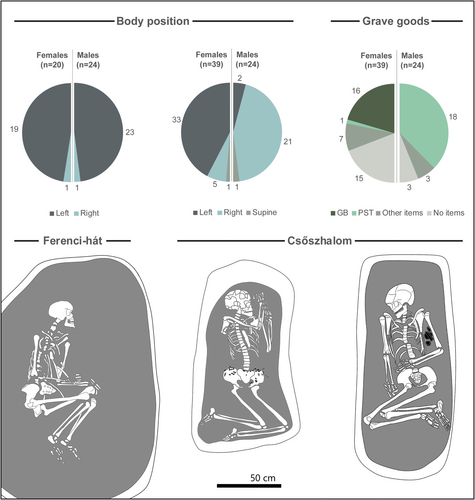
FH 유적지에서는 이전 연구에서 사망자들이 생물학적 성별과 관계없이 대부분 왼쪽으로 눕혀진, 몸을 구부린 자세로 매장되었다는 점이 지적되었습니다. 본 연구에서는 시신 자세를 확인할 수 있었던 44명의 남녀 중 42명이 왼쪽으로 눕혀 매장되었고, 단 2명(남성 1명, 여성 1명)만이 오른쪽으로 눕혀 매장되었습니다. 이전연구에서 보고된 바와 같이 , 연구 대상 집단에서는 부장품이 드물고 주로 어린이에게서 발견됩니다. 성인 매장에서는 부장품이 거의 없고, 장신구는 거의 없습니다. 따라서 본 분석에서는 이 부분을 고려하지 않았습니다.
CS 지역에서는 성별에 따른 차이가 매장 관습에 뚜렷하게 나타났으며, 시신의 자세는 기존의 관습을 따르는 것으로 보인다. 특히 고고학 및 생물인류학 자료 분석에 따르면, 헝가리 대평원의 신석기 시대 문화에서는 여성은 왼쪽으로, 남성은 오른쪽으로 매장되는 경향이 있다. 본 연구에 포함된 CS 지역 성인 66명의 시신 자세를 분석한 결과, 매장 방향은 사망자의 생물학적 성별과 강한 연관성을 보였다. 그러나 7명의 시신에서는 생물학적 성별과 예상되는 시신 자세가 일치하지 않아, 이러한 연관성이 절대적인 것은 아님을 알 수 있다.


